

Summary
I launched a news website from scratch and, within six months, it reached 200K clicks and 6 million impressions.
I ran it as a solo project and focused on keyword research, timely and useful content, E-E-A-T, topical authority and technical SEO. The site was accepted into Google News, earned money through AdSense and came through several Google algorithm updates without any link building.
Why I started it
I spend my working days helping clients reach their SEO goals, and I never get tired of seeing them excited when they do. So I decided to set up a personal project and apply the same skills to a site of my own.
This is how I used keyword research, content strategy, technical SEO, E-E-A-T and local SEO to hit that milestone in six months.
The goal
I built a news website from scratch in a highly competitive industry. Since I was starting from nothing, I set myself three targets for the first six months: at least 1,000 monthly visitors, approval for monetisation, and acceptance into Google News.
Keyword research
Standard keyword research doesn’t always work for news sites. When a story breaks, a newsroom is focused on getting the report out, and nobody is thinking about which keyword to target. Daniel Smullen, a technical SEO specialist by day and a dad by night, explains this well in this article.
News stories have a short life, so I also wrote evergreen content. My keyword strategy covered three types of content:
- informational searches
- navigational searches
- news content written without a keyword focus, which the speed of news makes necessary
I studied how people searched for each keyword and built content outlines around what they wanted to find.
News is a YMYL topic, so I had no room for error. That’s one reason I took journalism courses, which I explain below.
Content and E-E-A-T
E-E-A-T stands for experience, expertise, authoritativeness and trustworthiness. Google uses it to judge whether the information in its results comes from reliable, credible sources. That’s one of the reasons I signed up for a journalism programme with Reuters.
People still argue about whether E-E-A-T is a ranking factor. I don’t mind either way. What matters to me is that readers can see the writer knows the subject, because that builds trust.
- I wrote original news content that was informative and straight to the point.
- I made sure every article met the E-E-A-T standard.
- I set up content structures so every article was consistent and good quality.
- I found gaps in existing coverage and filled them, so readers got something they couldn’t find elsewhere.
Semantic and topical authority
I published at least one article every day for six months, planned to build semantic and topical authority for the site. None of it was written by AI. I set up a free news-gathering pipeline that delivered an average of five newsworthy reports a day, and I kept every article short and to the point.
Technical SEO
I chose WordPress because it scales well and is easy to use.
- I optimised the site heavily for speed, which helped both visitors and rankings.
- Once traffic started growing, I moved the site onto a CDN so pages loaded fast everywhere.
- I monitored and tuned the site every day to keep it performing well.
Indexing and the freshness algorithm
When you publish a page, Google has to find it (crawling), add it to its index (indexing) and then show it for relevant searches (ranking).
According to Google, “Google Search uses a freshness algorithm to give you the most up-to-date results.”
Freshness matters for news, so I made sure every article was crawled, indexed and ranked as fast as possible. 99% of the site’s pages were crawled, indexed and ranked within seconds.
Local SEO in South Africa
A new news site targeting national keywords would have struggled, so I optimised for local keywords first. It turned out to be the right call.
The results
Acceptance into Google News
Acceptance doesn’t guarantee your content will appear, but it’s a sign Google considers your content legitimate.

200,000 organic clicks in 6 months
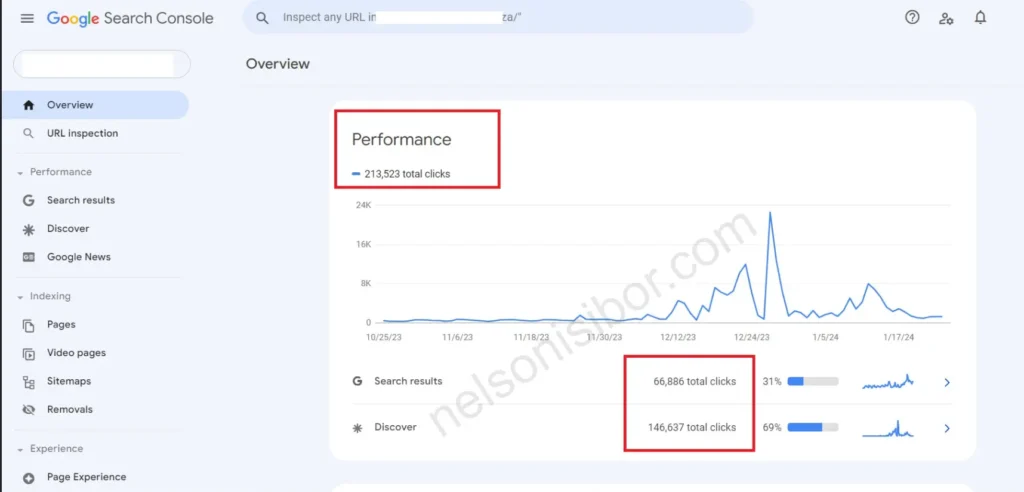
The site got 66,886 organic clicks from search and 146,647 clicks from Google Discover.
Discover traffic is a big deal for SEOs. If you use an Android phone, Discover is the feed of articles Google picks for you when you open the Google app or Chrome.
Lily Ray, Senior Director of SEO and Head of Organic Research at Amsive, describes it like this:
“Google Discover is a product Google launched in 2018 that shows mobile users a highly personalized, AI-driven feed of content from across the web, based on articles and topics they find most interesting. With Google Discover, the user does not need to search for anything. The product is a form of queryless search: the feed of content is displayed based on the user’s interests alone and without any query being entered.”
Google Search performance over 6 months

Search brought 6.95 million impressions and 83,600 clicks. The low points on the graph are mostly weekends, when people search less.
Google Discover over 6 months

Discover brought 147K clicks from 1.99M impressions, a CTR of 7.4%. Google advises publishers not to rely on Discover traffic alone, which explains the swings.
Monetisation
I monetised the site with AdSense and Clever Ads. I care about the reading experience, so I kept the ads unobtrusive enough that readers barely noticed them.
The view from Semrush

Ranking keywords
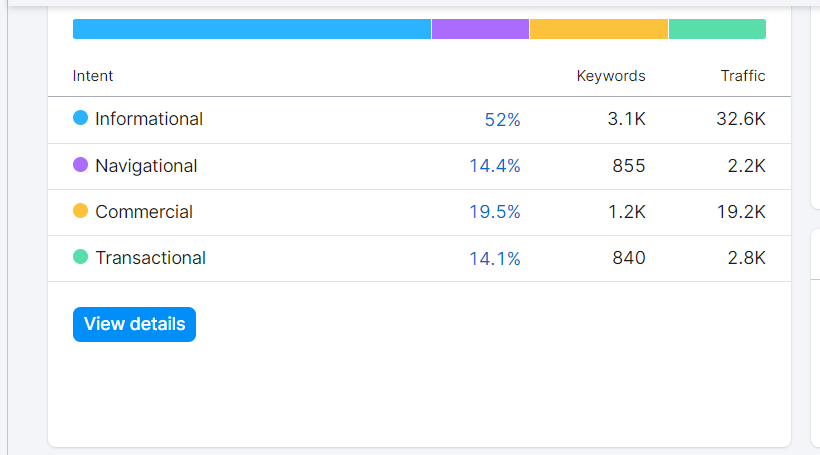
At the time, Semrush showed the site ranking for 4,300 keywords:
- 3,100 informational keywords (52%)
- 855 navigational keywords (14.4%)
- 1,200 commercial keywords (19.5%)
- 840 transactional keywords (14.1%)
Google Analytics

Between 1 July and 31 December 2023, the site had 128,792 users across 162,395 sessions. Direct visits were the biggest source, with 75,034 users.
Organic search was second, with 50,745 users and noticeably higher engagement at 44 seconds per session. Referral and organic social brought fewer users but engaged well, and referrals led with 5.36 events per session.
Surviving algorithm updates
Google released several core updates during this period without warning. Plenty of sites were wiped out, but this one came through the helpful content update and others intact. Almost every article won a featured snippet for its keyword.
Link building
I deliberately didn’t build links. Even so, some high-authority sites have started linking to the site.
What this means for your business
Every business can grow with the right SEO strategy, whether it’s new or established.
Going from zero to 200,000 clicks in six months came from patient work on content, technical SEO and an understanding of how Google works.
Business owners often think their company is the exception. They think their field is too competitive or their ideal client too unusual, or that SEO would cost too much to compete with bigger rivals. Some believe Google keeps new websites in a “sandbox” so they can’t rank straight away. This site ranked within its first six months.
What your business needs is the right strategy, the right keywords and the right content, and an SEO partner who can deliver all three. I did it for my own site, and I can do it for yours.
Schedule a free meeting with me.
P.S.
Google has said publishers shouldn’t rely on Discover traffic because it’s less predictable and dependable, as the charts show. That’s why I also publish evergreen content for a steady stream of visitors. Even without Discover, the site would have had more than 60,000 organic clicks in six months.